The Gaïa
Pioneer of the New Space Era
The Earth Space Ship (ESS) Gaïa marks a historic breakthrough in space exploration. Conceived by the visionary Jonathan Erikson and built in record time thanks to the power of Stareyes’ artificial intelligences, it is the first true inhabited interstellar ship capable of autonomous navigation within the solar system.
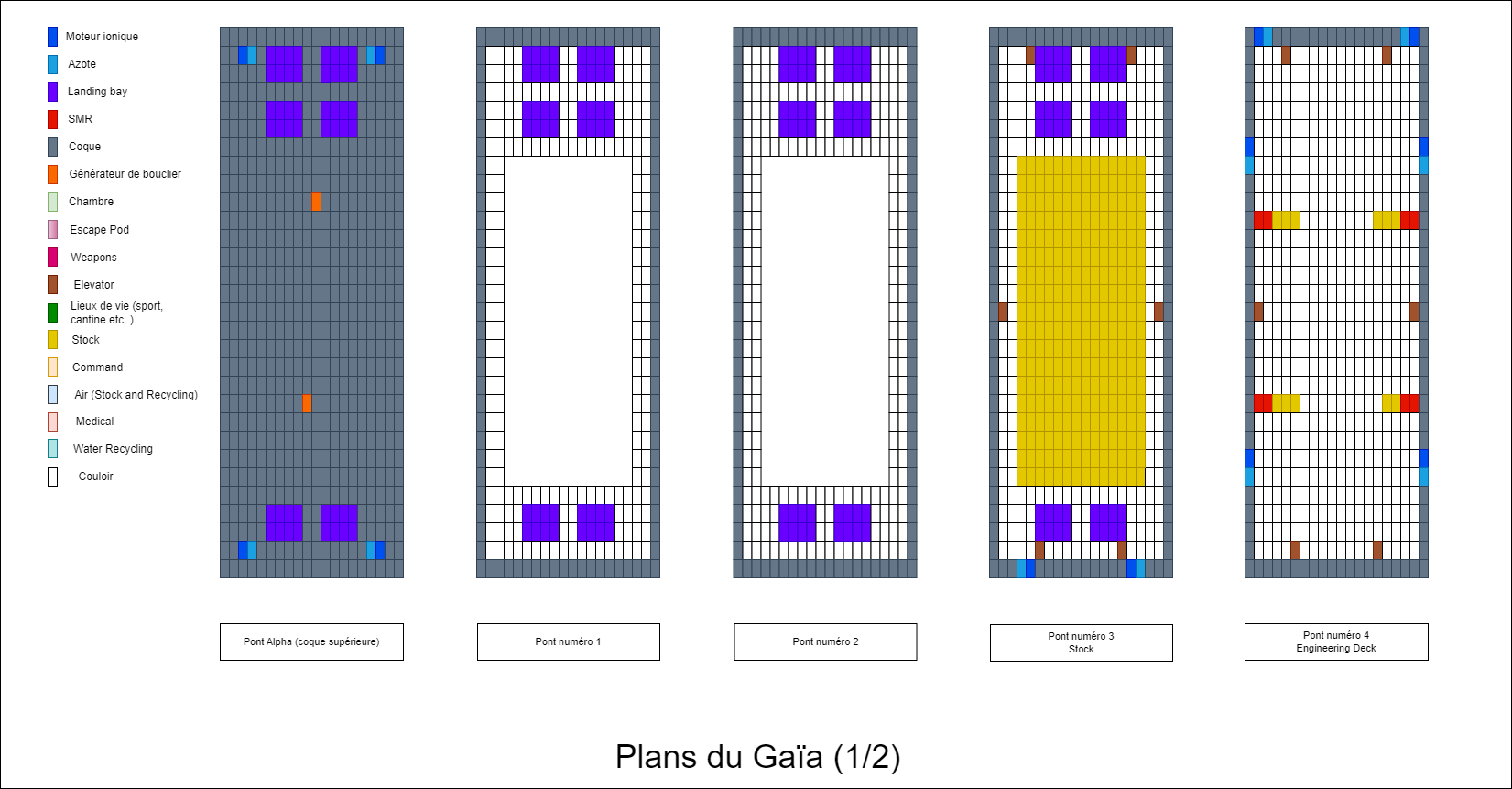
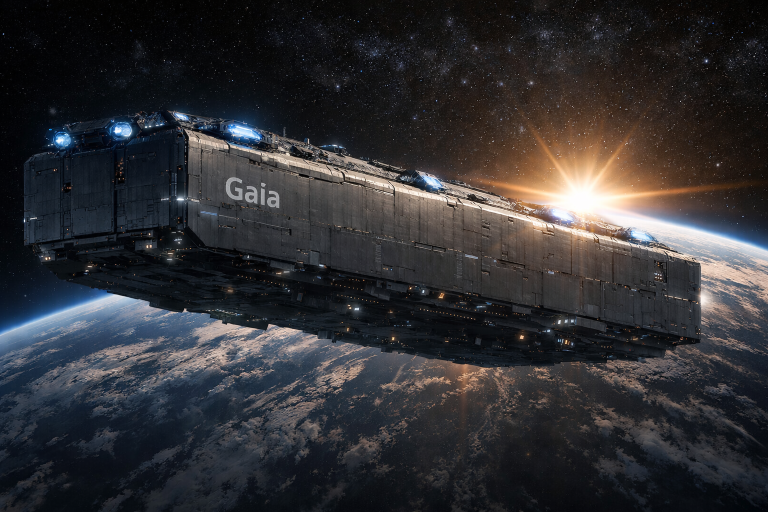
The Gaïa prioritizes function over form. Far from the sleek silhouettes of traditional science fiction, it appears as a massive rectangular parallelepiped with imposing dimensions: 300 meters long, 100 meters wide, and 30 meters high. Its outer surface is completely smooth, dotted only with the necessary protrusions for reactors and shield generators.
The Gaïa is the result of a planetary logistical puzzle. It is composed of 5,496 standard containers (10m x 5m x 3m), manufactured around the world and launched into orbit by gravitational catapult aircraft. Once in space, conveyor robots (RCM) piloted by the AI Zara assembled these modules to form the final structure.
A Mission in Service of Humanity
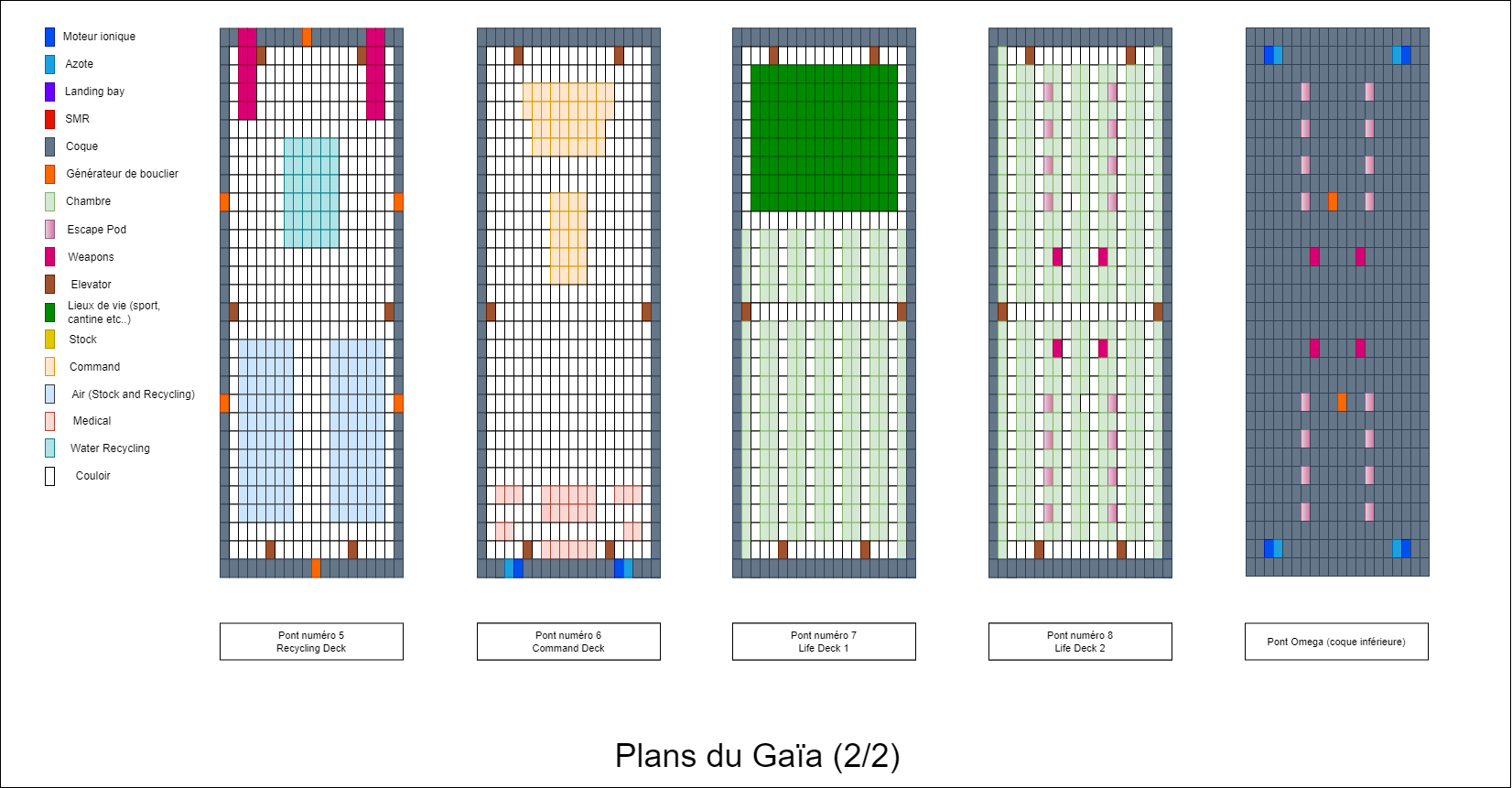
Designed to accommodate up to 465 crew members, the Gaïa is a true floating city. The work organization is rigorous, based on a three-shift system of eight hours (work, sleep, rest) ensuring constant vigilance.
The living spaces were designed to break the austerity of metal: the corridors are lined with screens displaying terrestrial landscapes or works of art, and the ship features its own bar, a multicultural canteen, scientific laboratories, and even ultraviolet cabins to preserve the health of its residents.
More than just an explorer, the Gaïa serves as a projection platform for Stareyes Humanitary. It enables the coordination of emergency interventions during natural disasters on Earth from space, deploying its Carryall shuttles in record time to deliver food and medical supplies anywhere on the planet.