Fusion Power Plant
Fission or...
Imagine a large atomic nucleus (like that of uranium) as a slightly unbalanced billiard ball.
When a neutron is fired at it, the nucleus splits into two smaller pieces. This is fission. As it splits, it releases an enormous amount of energy in the form of heat, and also emits other neutrons that will split other nuclei in turn: this is called a chain reaction. This is exactly what happens in current nuclear power plants. A very small amount of matter (a few grams) is enough to produce as much electricity as a huge quantity of coal or gas.
... Fusion?
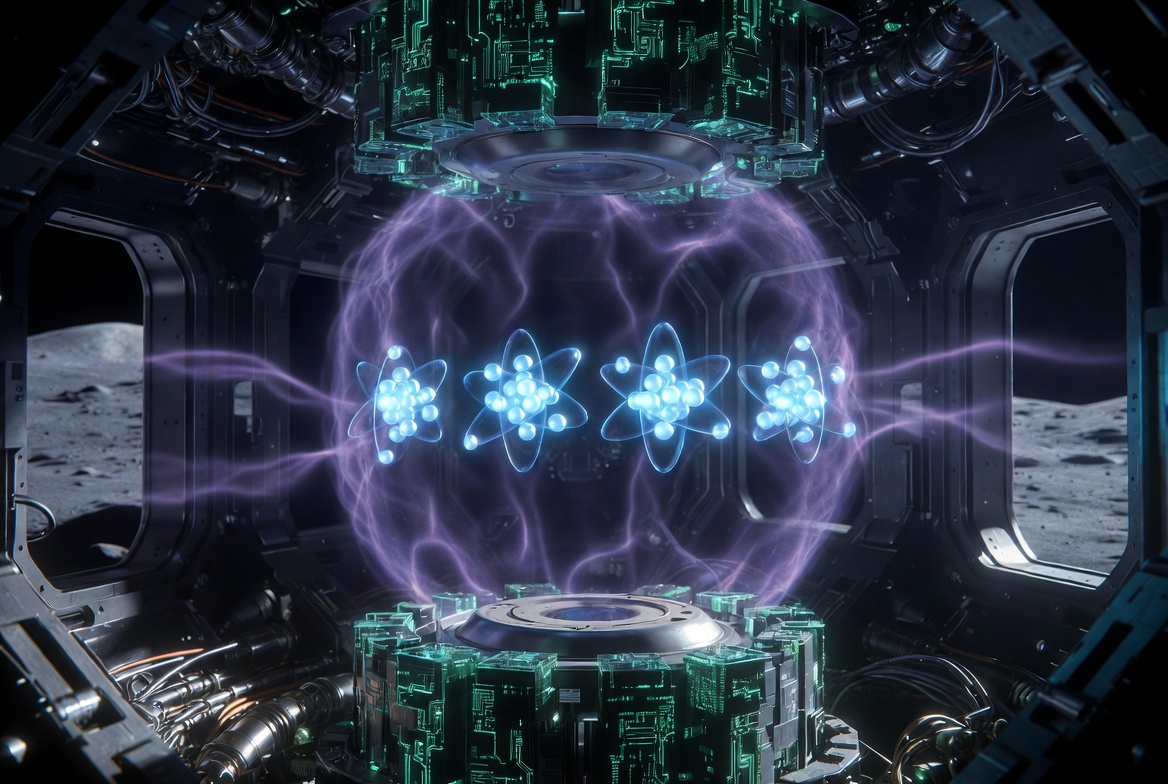
Conversely, fusion consists of joining two small nuclei together (usually isotopes of hydrogen: deuterium and tritium). When they fuse, they form a heavier nucleus (helium) and release an even greater amount of energy than in fission. This is exactly what happens at the heart of the Sun: millions of tons of hydrogen fuse every second to give us light and heat.
Thanks to gravitational waves, it becomes possible to push the nuclei together and fuse them...