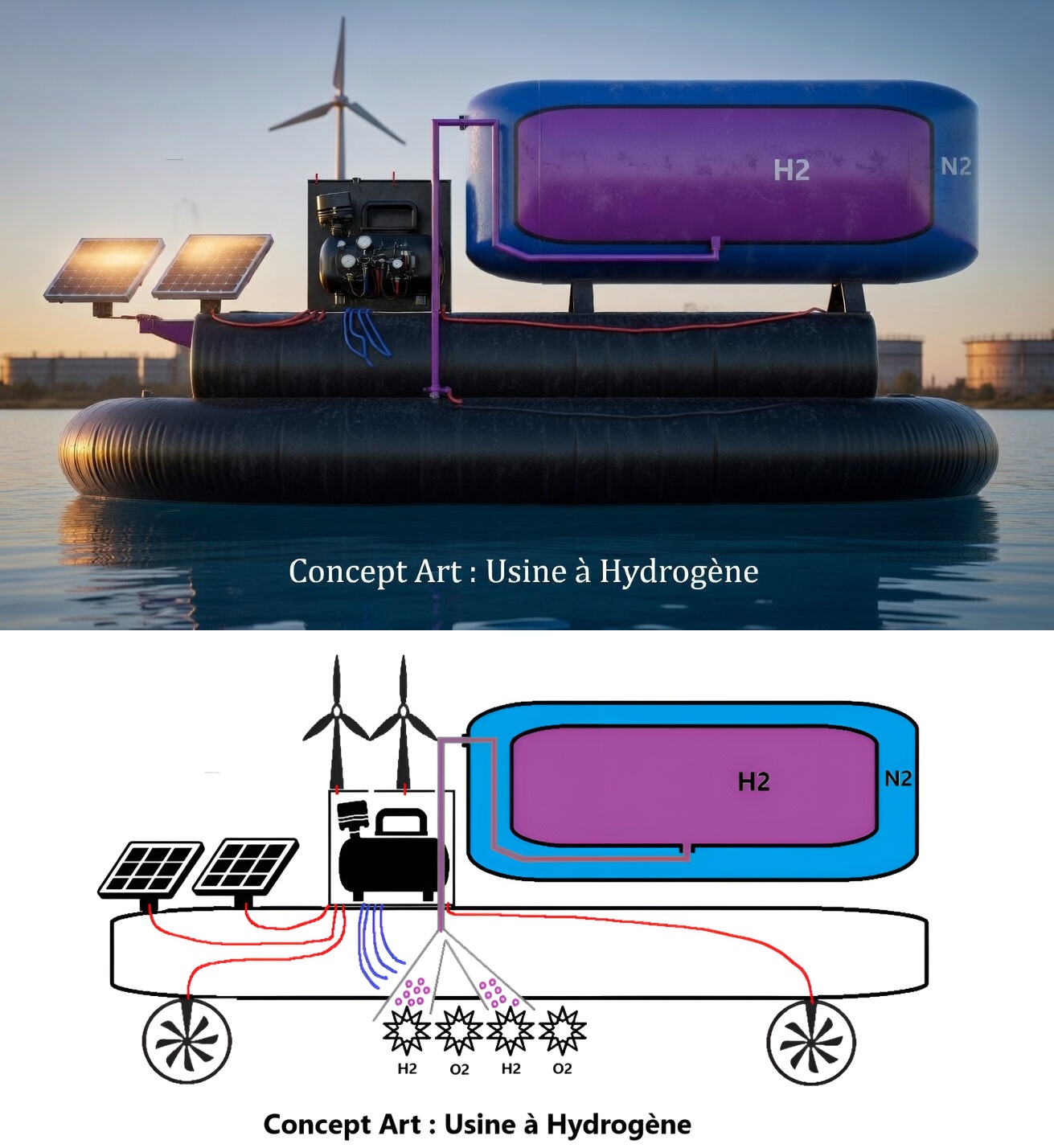
The Hydrogen Factory and its Storage
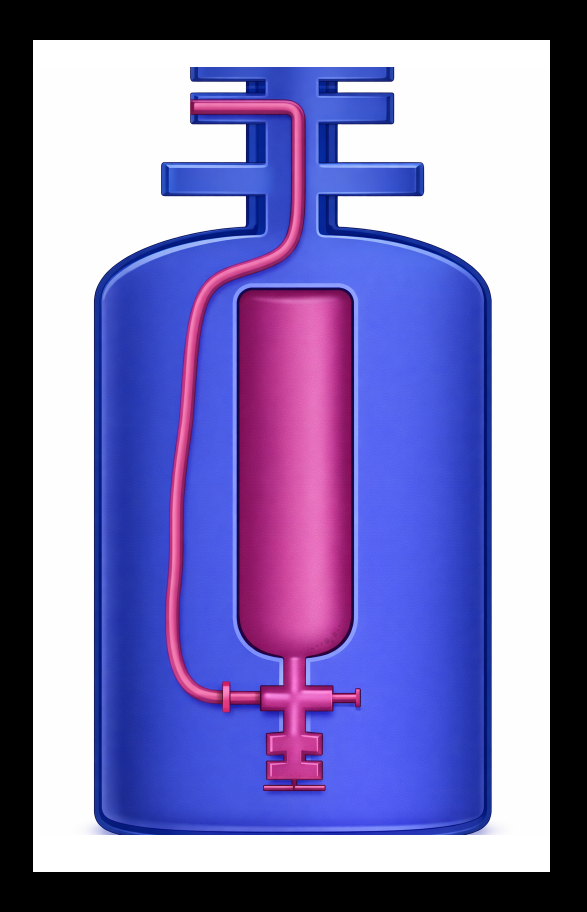
Hydrogen Storage
To understand how the Hydrogen Factory works, it is first necessary to understand the storage technique. Hydrogen in gaseous form has very small molecules and therefore escapes easily through joints and cracks. In addition, the gas is extremely flammable, and its storage and transport in gaseous or compressed form can be dangerous.
The hydrogen storage principle developed by Stareyes involves positioning the hydrogen cylinder with its opening facing downward while immersing it in a tank of liquid nitrogen. Liquid nitrogen is very cold, which can prevent an explosion and stop the free expansion of the gas into the air, which would be the prelude to combustion.
Conversion of Lost Energy
The principle of a hydrogen factory is to recover solar, wind, and tidal energy lost at sea. Using a pneumatic mattress like that of a zodiac, solar panels and wind turbines are placed above and tidal turbines below. The electrical energy thus recovered is used for two things: electrolyzing seawater and compressing the hydrogen created in the reservoir.
Electrolysis of water consists of passing a direct current through water (preferably salted for conductivity), and the electricity separates the water molecules into dihydrogen and dioxygen. The recovered hydrogen is then compressed into the reservoir. Electrolysis is slow and has low efficiency, which is why it is interesting to position a large number of these devices to generate large quantities of gas.